

 The modern ghost hunting landscape is filled with gadgets that promise communication, detection, and validation. Spirit boxes sweep radio frequencies in search of voices from beyond. EMF meters light up dramatically in darkened rooms. REM pods chirp when something invisible comes near. Motion sensors, vibration alarms, thermal cameras, laser grids, digital recorders—all marketed, implicitly or explicitly, as tools capable of detecting the presence of the dead.
The uncomfortable truth is that none of these devices were designed to detect ghosts. They were designed for entirely different, practical purposes. When removed from their original context and placed inside a paranormal narrative, they do not suddenly acquire new scientific capabilities.
They simply acquire new interpretations.
Take the EMF meter, perhaps the most iconic tool in paranormal television. EMF meters are engineered to measure electromagnetic fields generated by wiring, appliances, electrical panels, transformers, cell phones, radios, and countless other everyday sources. Buildings are saturated with fluctuating electromagnetic activity. Wiring behind walls, passing vehicles, HVAC systems cycling on and off, and even handheld radios used by investigators can cause readings to spike. The meter responds exactly as it was designed to do. When that spike is interpreted as a “spirit presence,” the device is not malfunctioning; the interpretation is. The leap from “electromagnetic fluctuation” to “ghost” is entirely human.
Spirit boxes and so-called “ghost radios” operate by rapidly sweeping AM or FM frequencies, producing fragmented snippets of broadcast audio. The human brain is extraordinarily adept at pattern recognition, particularly in ambiguous sound. We are wired to detect language, even where none exists. When fragments of speech are sliced apart and reassembled by random scanning, it becomes almost inevitable that listeners will perceive meaningful words and phrases. This is not communication from another realm; it is auditory pareidolia amplified by expectation. If a group is already asking a question, their brains will strain to hear an answer. And often, they will.
REM pods and proximity-triggered devices are similarly vulnerable to environmental contamination. Many are based on capacitive sensing, meaning they detect changes in electrical fields around the antenna. Static electricity, humidity shifts, nearby electronics, body movement, and even subtle environmental changes can trigger responses. In a controlled laboratory setting, these devices respond to measurable physical influences. In a dark, haunted room, the same response is often attributed to unseen hands. The device is doing what it was engineered to do. The narrative is what changes.
Digital recorders used for EVP sessions are another example. Electronic Voice Phenomena often emerge from background noise, distant conversations, rustling clothing, building creaks, or radio bleed-through. Once an investigator suggests what a faint sound “says,” others frequently hear the same phrase. This phenomenon, known as suggestion bias, or confirmation bias, demonstrates how easily interpretation can be shaped. Play a clip without context and ask ten people what they hear; you will often receive ten different answers. Provide a subtitle beforehand, and most will suddenly hear that exact phrase. The data itself has not changed. The framing has.
In recent years, perhaps the most telling development has been the explosion of word-generating paranormal phone apps. These applications are often marketed directly to enthusiasts, wrapped in dark aesthetics, ominous sound effects, and promises of real-time communication. Many contain built-in libraries of words, carefully curated terms such as “help,” “angry,” “cold,” “here,” “leave,” “death,” “child,” “pain,” or common names, designed to resonate emotionally with users. The software then outputs words either randomly or based on simple environmental inputs from phone sensors, presenting them as potential spirit responses.
To someone unfamiliar with how these apps function, the experience can feel astonishingly interactive. A question is asked aloud. A word appears seconds later. The coincidence feels deliberate. Yet from a technical standpoint, the phone is not detecting spirits. It is executing code. Random number generators select entries from a pre-programmed vocabulary. Sensor data, such as minor fluctuations in magnetometers, accelerometers, or ambient noise levels, may be used as triggers, but there is no validated mechanism connecting those inputs to disembodied consciousness.
Despite this, many teams now structure entire investigation sessions around these apps. Questions are posed into the air. Words appear on screen or are spoken aloud by synthetic voices. Investigators then begin linking the outputs together, weaving them into a loose narrative. A sequence like “man,” “angry,” “basement,” “hurt,” “leave” can quickly become a tragic backstory about a male spirit tied to the property. The gaps between words are filled not by data, but by imagination. The human mind, once again, does what it does best: it constructs coherence from randomness.
The danger lies in how persuasive this process can feel. Because the vocabulary is tailored to paranormal themes, nearly any word will seem relevant. Because questions are often broad’; “Who is here?” “What do you want?” “How did you die?”. Almost any response can be interpreted as meaningful. When several words appear over time, selective memory highlights the apparent “hits” while disregarding the countless outputs that do not fit. Gradually, a story solidifies. It feels discovered rather than invented.
This phenomenon illustrates a broader issue: these tools create the illusion of dialogue without the burden of verification. There is no control condition, no baseline for a random distribution, and no statistical analysis to determine whether responses differ from the expected chance level. Yet the emotional weight of seeing or hearing a word that appears relevant can be profound. For individuals seeking connection, reassurance, or confirmation, that experience can be deeply compelling.
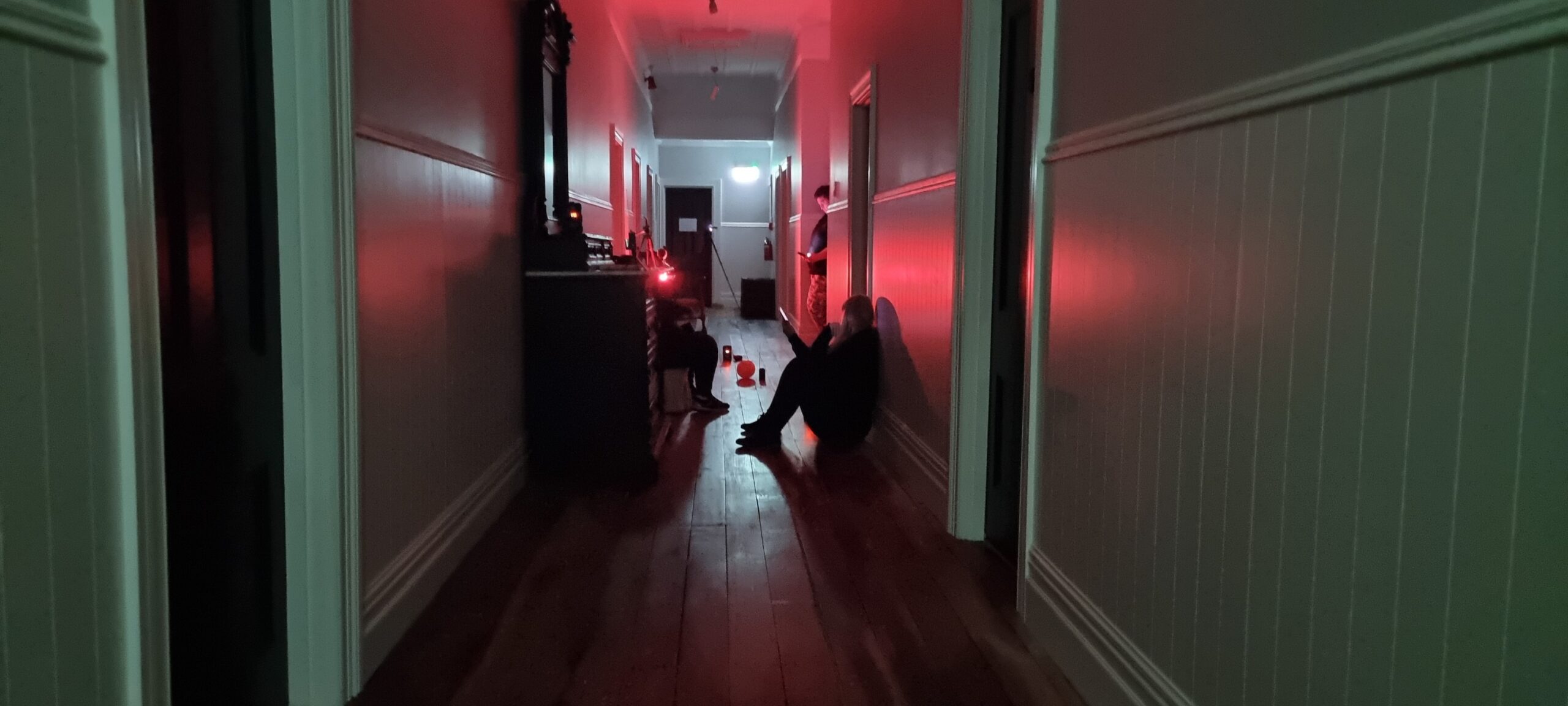
Commercially, the appeal is obvious. Phone apps are inexpensive to develop and widely accessible. They offer immediate results without requiring technical knowledge. Unlike traditional equipment that may require interpretation of environmental readings, word apps provide ready-made language. They bypass ambiguity by delivering clear, emotionally charged terms. In doing so, they often bypass critical thinking as well.
This is not to accuse every developer of malicious intent. Some may simply be capitalising on a niche market. But the outcome remains the same: devices and applications that encourage narrative-building rather than evidence-gathering. They foster a sense of communication without establishing a credible mechanism. They reward belief and participation more than scrutiny.
The broader pattern is consistent across much of ghost-hunting technology. Flashing lights, sweeping frequencies, spoken words, these outputs feel responsive and dynamic. They simulate interaction. Yet none have demonstrated reliable, repeatable evidence that they detect or communicate with the dead. They measure environmental variables or generate programmed outputs. The rest is interpretation layered on top.
None of this definitively disproves the existence of ghosts. It does, however, highlight the gap between experience and evidence. Popular ghost-hunting gadgets and, increasingly, word-generating apps, are extraordinarily effective at producing stimuli that can be shaped into stories. They are far less effective at producing verifiable data.
Let’s just stop, and think about it for a moment. If these gadgets and apps truly could interact and communicate with the deceased and we could enter into meaningful and insightful dialog with family members who have passed away, wouldn’t that be the most groundbreaking and world changing development ever? Turning on a free or cheap phone app or spirit box and you’re instantly chatting away to old Uncle Bob, would be a total game changer. Would it not? Wouldn’t scientists all over the world be using them to further the study and make huge leaps in human developments?
I see teams daily online, doing their investigations, creating completely made up back stories and scenarios, about non existent people and then put it out to the world (social media) about their incredible evidence, proof and validations.
If the field of paranormal research is to move forward, it must separate emotional engagement from evidential standards. Gadgets and apps should be understood for what they are: tools operating within known physical and digital parameters. Without a demonstrated mechanism linking their outputs to independent, external consciousness, their results remain ambiguous at best and misleading at worst.
Until that distinction is widely acknowledged, the blinking lights, random words, and dramatic beeps will continue to captivate audiences. They will continue to create moments that feel meaningful. However, meaning is not proof. And without rigorous validation, the harsh reality is that these devices may reveal far more about human expectations, hope, and imagination than about the existence of the paranormal.
