
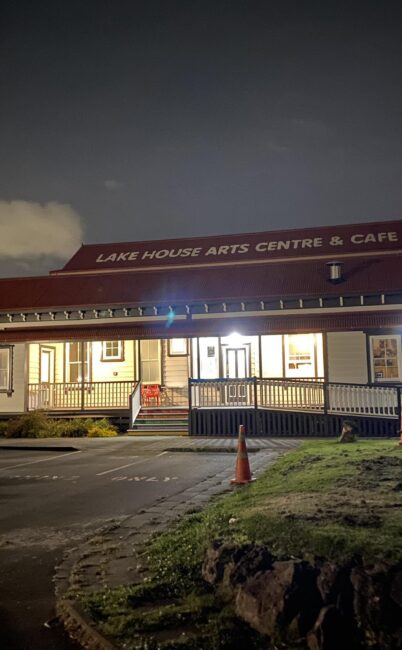
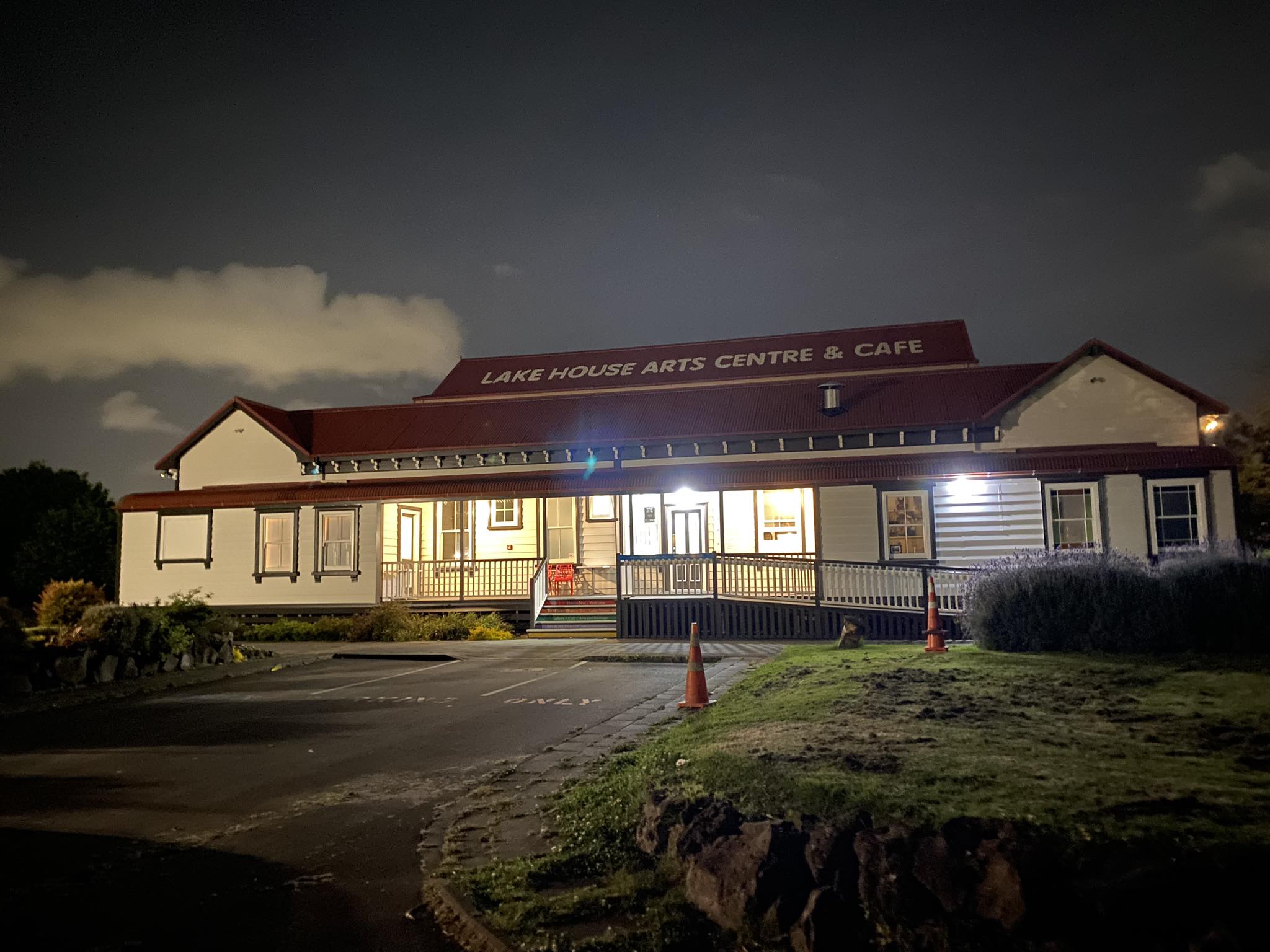
 For Paranormal NZ, their work inside Auckland’s Lake House Art Centre is not a fleeting visit or a staged overnight curiosity. It is something far more deliberate: an ongoing investigation residency that has unfolded over multiple years, allowing the team to return to the same rooms, staircases, and quiet corners again and again. In a field often dominated by one-night vigils and quick conclusions, this long-term approach has turned the Lake House into one of the most closely observed paranormal locations in the country.
The building itself plays no small part in that. Dating back to the late nineteenth century, the Lake House has lived several lives. It began as a family residence, later operated as a boarding house, and was pressed into service during the 1918 influenza pandemic. Over time, it gained a reputation as a lively social space, before eventually becoming the community arts centre it is today. That layered history, domestic, medical, and social, creates an environment where stories accumulate easily, and where atmosphere alone can influence perception.
What keeps Paranormal NZ returning, however, is not just the history but the consistency of reported experiences. Across different investigations, often involving different team members and guests, certain patterns have continued to surface. One of the most frequently described is the appearance of small, shadow-like forms, often glimpsed moving along the staircase or passing through hallways. These sightings are rarely clear or sustained, instead appearing in peripheral vision or for brief moments, which has only added to their intrigue. On several occasions, more than one person has reported seeing similar movement at the same time, a detail the team considers noteworthy even while acknowledging how easily low light and expectation can distort perception.
Closely tied to these reports is the recurring suggestion of a child-like presence. Some investigators have attempted to engage with this idea using simple, controlled methods such as placing objects or quietly asking questions in still rooms. There have been moments when subtle movements or equipment responses have been noted, though these are always treated cautiously, with the team careful not to present them as definitive interactions. The emphasis remains on recording and comparing rather than declaring.
There have also been less frequent but more striking accounts involving a taller, darker figure, usually seen deeper within the building or in transitional spaces such as hallways. In at least one instance, a photograph appeared to show both a larger form and a smaller one within the same frame. Even here, Paranormal NZ has resisted sensationalism, pointing out the strong possibility of visual misinterpretation in low-light conditions, where shadows and structure can easily combine into something that appears human.
Physical disturbances are rare, but not entirely absent from their records. A notable incident involved a camera-mounted light being unexpectedly shifted while an investigator was moving through a stairwell. Experiences like this are scrutinised closely because they sit at the edge of what can be explained by normal environmental factors. The team’s approach is to revisit such events in subsequent visits, attempting to recreate conditions and determine whether similar outcomes occur.
Sound is another recurring element. Investigators have reported hearing footsteps on wooden floors when no one else is present, as well as faint, ambiguous noises suggesting movement elsewhere in the house. Occasionally, these sounds align with known structural behaviours; old timber expanding or settling, but at other times they occur under conditions that are harder to immediately account for. As with all aspects of the investigation, these moments are logged, compared, and left open to interpretation.
What defines Paranormal NZ’s residency more than any individual experience is the methodology behind it. By returning repeatedly, they can observe whether phenomena cluster around specific times, environmental conditions, or investigative approaches. They can compare notes across months and years, identify recurring witness descriptions, and test whether specific triggers produce consistent results. This slow accumulation of data stands in contrast to the dramatic, conclusion-driven style often associated with paranormal media.
Equally important is the tone they bring to the work. There is a clear effort to balance curiosity with restraint. Even when confronted with unusual or compelling potential evidence, the team avoids framing them as proof of haunting. Instead, the Lake House is treated as an active case study, one that may ultimately reveal as much about human perception and environmental influence as it does about the possibility of the paranormal.
Today, the Lake House Art Centre continues to function as a public space filled with art, workshops, and visitors, most of whom are unaware of the quiet, ongoing investigation that takes place after hours. This dual identity adds another layer to the story. It is not an abandoned building or a sealed-off relic, but a living environment where ordinary daily activity coexists with reports of the unexplained.
The goal of Paranormal NZ’s residency is not to reach a final, definitive answer, but to build a detailed, evolving record. Through patience, repetition, and careful observation, they are attempting to understand whether the patterns they are seeing represent something external and unknown, or something rooted in the interplay between place, history, and the human mind. For now, the Lake House remains unresolved, its reputation shaped not by a single dramatic event, but by the quiet persistence of experiences that refuse to fully explain themselves.
Paranormal NZ at the Lake House Art Centre: An Ongoing Investigation Residency
Author: Mark Wallbank
